Scale & Strategy
together with
This is Scale & Strategy, the map and compass of business newsletters (we show you what’s ahead).
Here’s what we got for you today:
- Apple finally has an AI story that makes sense
-
Apple finally has an AI story that makes sense
For the first time in a while, Apple looked less like a company scrambling to catch up in AI and more like one executing a plan.
At WWDC 2026, Apple unveiled the next generation of Siri, expanded Apple Intelligence across its ecosystem, and spent a surprising amount of time explaining how it plans to handle privacy, safety, and security along the way.
The new features matter. The bigger story is that Apple's AI strategy finally feels coherent.
Three things stood out.
Apple is turning safety into a product feature
Most AI companies treat safety as a footnote buried somewhere between benchmark charts and product demos.
Apple put it near the front of the presentation.
Before showing off new capabilities, the company walked through the privacy architecture, child safety protections, and guardrails surrounding Apple Intelligence. That's not accidental. Apple knows it isn't going to win the race for the smartest model. It wants to win trust.
Whether consumers care as much about AI safety as Silicon Valley does remains an open question. But Apple has spent two decades building a brand around privacy, and it's one of the few companies with a realistic shot at making that differentiation work.
AI is disappearing into the operating system
Most AI products still assume users want to open a chatbot and start typing.
Apple continues to bet on the opposite.
Rather than forcing users into a dedicated AI experience, the company is weaving AI into the places people already spend time: messages, writing tools, photos, camera workflows, home screens, productivity apps, and system-level interactions.
That approach sounds less exciting than launching another frontier model.
It's probably more important.
The biggest AI products over the next decade may not be the ones people consciously use. They may be the ones people barely notice because they're embedded directly into existing workflows.
Apple understands that better than most.
Apple may bring more people into AI than any frontier lab
From a pure capability perspective, there wasn't much at WWDC that OpenAI, Google, Anthropic, or Perplexity haven't already demonstrated in some form.
Apple wasn't leading.
Apple was packaging.
That's not a criticism.
Distribution has always been Apple's superpower.
More than a billion people already live inside Apple's ecosystem. Making AI easier to access, easier to trust, and easier to discover could end up driving more adoption than another incremental benchmark improvement from a frontier lab.
History suggests convenience beats sophistication more often than technologists like to admit.
The agent gap is becoming harder to ignore
The most obvious weakness in Apple's presentation was agents.
OpenAI has Codex.
Anthropic is building increasingly capable autonomous workflows.
Google is pushing deeper into agentic systems across its ecosystem.
Apple's closest equivalent remains an upgraded version of Shortcuts that can generate automations from natural language prompts.
That's useful.
It's also several steps removed from the direction the rest of the industry is heading.
Agentic systems are advancing faster than almost any other category in AI right now. Users increasingly expect software to execute tasks, not just answer questions. Apple still doesn't have a clear answer for what its version of that future looks like.
That doesn't mean Apple is wrong to move cautiously.
Giving autonomous systems access to personal devices, communications, files, payments, and private data creates risks that few companies have solved well.
But eventually Apple will need a stronger position than "we'll get there later."
One of the most interesting comments from WWDC came after the keynote.
Mike Rockwell, who led the Siri overhaul, revealed that Apple had a significantly improved Siri working internally more than a year ago. Instead of shipping it, the company rebuilt the architecture from the ground up to create something that could scale and evolve over time.
That's a very Apple decision.
Slower in the short term. Better foundations in the long term.
The AI industry rarely rewards patience. Apple is betting that durability matters more than winning a few news cycles.
We'll find out soon enough whether that bet pays off.
Notion gives you the workspace your startup deserves — docs, tasks, product roadmaps, team wikis, and investor updates in one clean space.
For a limited time, early-stage startups get 6 months of Notion Premium free. No credit card. No catch.
OpenAI says the AI race has entered a new phase
For years, OpenAI's mission was straightforward: build increasingly capable AI systems.
Now the company is talking less about building the technology and more about what happens after it arrives.
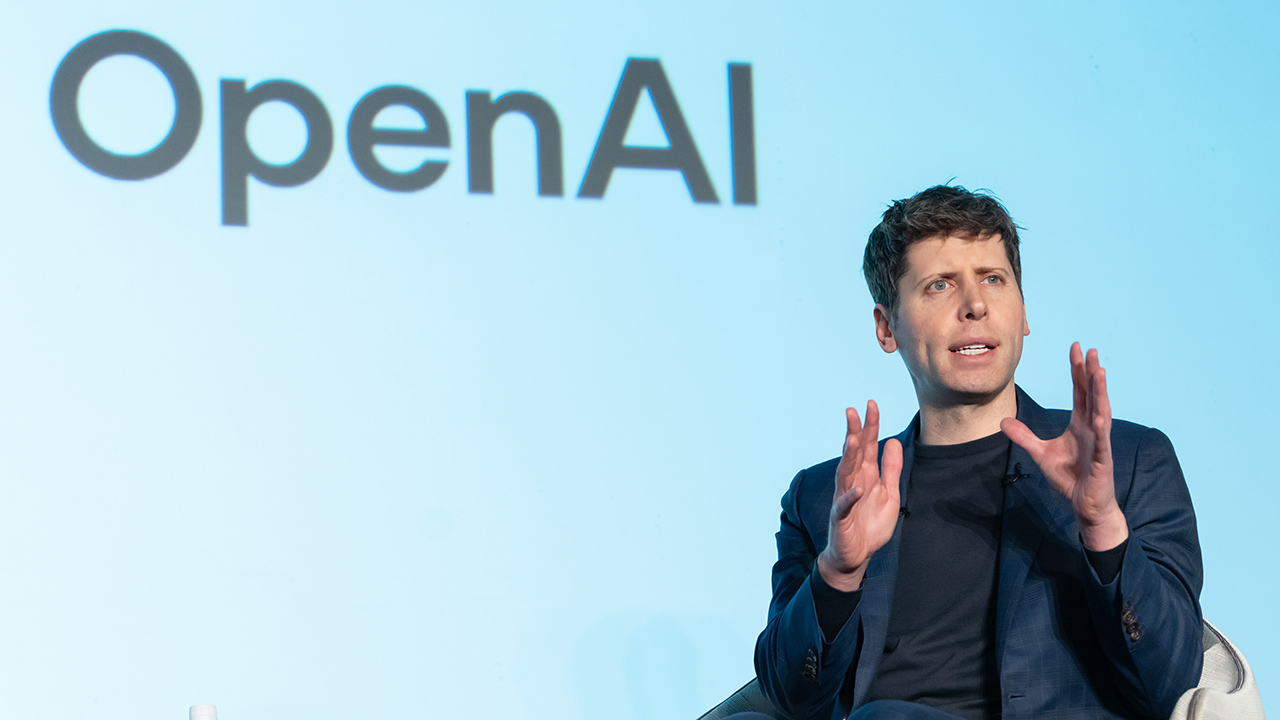
In a new essay titled Built to Benefit Everyone, CEO Sam Altman and chief scientist Jakub Pachocki argue that OpenAI has entered what they call its "third phase."
The first phase was research.
The second was turning research into products used by hundreds of millions of people.
The third phase is bigger: reshaping economies, institutions, and daily life around increasingly capable AI systems.
That's an important shift.
The post lays out three long-term goals.
First, OpenAI wants AI that can accelerate scientific discovery and eventually automate large parts of the research process itself.
Second, it wants AI to drive economic growth by increasing productivity across industries.
Third, it wants to give every person access to what it describes as a "personal AGI" capable of helping them pursue their own goals.
That last point is arguably the most revealing.
For all the discussion around AGI replacing workers, automating industries, or transforming society, OpenAI is increasingly framing the technology as a personal tool rather than a centralized system making decisions on people's behalf.
The company explicitly pushed back against the idea of fully automating everything.
"AI should help people pursue their goals, not become untethered from them," the authors wrote.
That's a notable message at a time when much of the industry conversation revolves around autonomous agents, self-improving systems, and increasingly capable forms of automation.
But the most interesting part of the essay wasn't the vision.
It was the governance discussion.
OpenAI floated the idea of a global coordination body capable of monitoring frontier AI development and, in certain scenarios, slowing or pausing work on the most advanced systems.
That proposal arrived just days after Anthropic made a similar argument.
The timing is hard to ignore.
For years, discussions about AI pauses and international oversight lived mostly in academic papers and policy circles. Now two of the world's most influential AI labs are openly talking about mechanisms for coordinating frontier development.
Whether those proposals are realistic is another question entirely.
Global coordination sounds sensible on paper. Building an international body that can meaningfully influence AI development across competing companies and rival nations is a far more complicated challenge.
Still, the fact that these conversations are becoming more common tells you something about how the labs themselves view the trajectory of the technology.
The broader takeaway isn't that OpenAI suddenly wants to slow down.
Nothing about the company's product roadmap suggests that.
What has changed is the framing.
OpenAI is increasingly positioning itself as both a builder of frontier AI and a participant in the debate over how that technology should be governed.
That's becoming a common pattern across the industry.
The labs continue pushing aggressively toward more capable systems while simultaneously discussing safeguards, oversight frameworks, and worst-case scenarios.
Some critics view that as responsible planning.
Others see it as an attempt to shape the rules before governments do.
Either way, the conversation has clearly evolved.
A year ago, most AI discussions centered on what these systems could do.
Now the biggest labs are spending more time discussing what happens if they succeed.
Was this email forwarded to you?
That’s it for today and as always It would mean the world to us if you help us grow and share this newsletter with other operators.
Our mission is to help as many business operators as possible, and we would love for you to help us with that mission!