Scale & Strategy
together with
This is Scale & Strategy, your friendly neighborhood ‘business information sponge’ (squeeze us out daily → get smarter about BizOps).
Here’s what we got for you today:
- Anthropic thinks honesty might be a feature, not a bug
-
Anthropic thinks honesty might be a feature, not a bug
Every frontier model release now follows a familiar script: bigger benchmarks, stronger coding scores, better reasoning, improved agents, and a chart showing a line moving slightly higher than last month's line.
Anthropic’s new Claude Opus 4.8 does all of that. The model improves on Opus 4.7 across coding, reasoning, financial analysis, and agentic computer use, while rolling out new workflow and developer features.
The interesting part isn't the performance bump.
It's that Anthropic is trying to make honesty a competitive advantage.
The company says Opus 4.8 is significantly better at recognizing uncertainty and less likely to confidently assert things it doesn't actually know. Early testers reportedly found the model more willing to acknowledge ambiguity, while Anthropic's own evaluations showed it was four times less likely to overlook flaws in code it generated itself.
That might sound like a small improvement. It isn't.
One of the biggest problems with modern AI isn't that models are wrong. Humans are wrong all the time. The problem is that models are often wrong with extraordinary confidence. They can produce a completely fabricated answer with the same polished certainty they use when explaining something factual.
For most real-world use cases, that's far more dangerous than occasional mistakes.
A model that says "I don't know" at the right moment can be more valuable than a model that scores slightly higher on another benchmark but confidently invents information when pushed outside its knowledge boundary.
The release also includes several upgrades aimed at agent workflows.
Claude Code can now tackle larger projects through a research-preview feature called Dynamic Workflows, allowing it to coordinate hundreds of parallel subagents within a single task. Anthropic also introduced effort controls, letting users decide how much reasoning budget Claude spends on a problem, and updated its Messages API to allow instruction changes mid-task without breaking prompt caching.
Taken together, these are the kinds of features that matter more to developers than benchmark screenshots.
The bigger signal may have been buried near the bottom of the announcement.
Anthropic says it's preparing to release a new class of models beyond the Opus family entirely, likely referring to the long-rumored Mythos line. If that timeline holds, the company is effectively saying that Opus is no longer the ceiling.
That announcement landed the same day Anthropic unveiled a massive Series H round valuing the company at $965 billion. At this point, the frontier AI race increasingly resembles a contest to see who can spend the GDP of a small nation most efficiently on compute.
Still, the honesty angle is what stands out.
The industry has spent the last few years optimizing models to be more capable. That's important, but capability isn't the only bottleneck anymore. Reliability is becoming its own competitive category.
Most users can't meaningfully tell the difference between two models that score 92% and 94% on some obscure benchmark. They absolutely notice when one confidently hallucinates a legal citation, invents a financial figure, or ships broken code.
That's why this release feels different from the usual benchmark arms race. Anthropic isn't just claiming Opus 4.8 is smarter. It's claiming the model is better at knowing when it might be wrong.
If that holds up in practice, that may end up mattering more than another few percentage points on a leaderboard that nobody remembers two weeks later.
The perfect email is useless in a spam folder. This suite guarantees maximum deliverability
You’ve built the list and crafted the copy.
You’ve designed a stunning email in your ESP.
Then you hit send, and… crickets. Opens are low, clicks are embarrassing, and the only replies you get are bounce notifications.
Sending to a bad list is more than wasted effort. It’s a direct threat to your sender reputation that risks drowning future campaigns in spam and promotion folders.
And no readers = no ROI.
Stop gambling with your deliverability.
ZeroBounce is the all-in-one platform trusted by marketers at Amazon, HubSpot and Netflix for landing their messages in primary inboxes.
They provide 99.6% accurate email validation, inbox placement testing, blacklist monitoring, and more, so you can send with absolute certainty and get a bigger ROI from your emails.
Discover why over 500,000 businesses rely on ZeroBounce to ensure their message is heard.
The AI gold rush is making memory chips worth trillions
For most of the AI boom, all roads led to Nvidia.
Now investors are starting to look at the companies supplying the companies supplying Nvidia.
Both SK Hynix and Micron Technology have crossed the $1 trillion valuation mark as demand for AI infrastructure continues to push deeper into the semiconductor supply chain.
SK Hynix surged another 10% this week, with shares now up more than 3x this year. Micron jumped nearly 20% after analysts at UBS sharply raised their price target on the stock.
Neither company sits at the center of the AI narrative the way Nvidia does. But both sit in a position that's arguably just as important: memory.
The dirty secret of the AI industry is that training bigger models isn't just a compute problem. It's a memory problem.
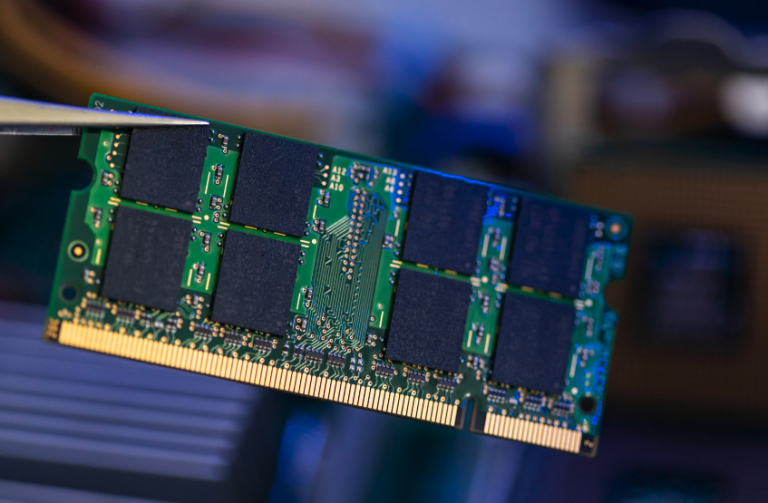
Every frontier model, every AI data center, every new cluster being deployed by hyperscalers needs enormous amounts of high-bandwidth memory (HBM) to move data fast enough to keep those expensive GPUs from sitting idle. And right now, there aren't enough of those chips to go around.
That's creating one of the most lucrative bottlenecks in tech.
SK Hynix has become one of Nvidia's most critical suppliers, while Micron and Samsung Electronics are racing to expand capacity as demand continues to outstrip supply.
The result is simple economics: constrained supply plus exploding demand equals pricing power.
And pricing power is what turns semiconductor companies into trillion-dollar companies.
The market is finally recognizing something that industry insiders have understood for a while. The AI buildout isn't just benefiting the companies designing the models. It's benefiting the companies making the picks, shovels, generators, cooling systems, networking equipment, and memory chips required to run them.
Nvidia remains the biggest winner by far. The company crossed a staggering $5 trillion valuation earlier this year, while Microsoft, Apple, Amazon, Alphabet, and Meta continue spending hundreds of billions building AI infrastructure.
But the second-order effects are becoming harder to ignore.
Every new AI data center creates demand for thousands of GPUs. Every GPU requires memory. Every memory shortage pushes pricing higher. Every pricing increase flows back into companies that most people couldn't identify on a stock chart two years ago.
That's why memory manufacturers are suddenly joining the trillion-dollar club.
The obvious question, of course, is whether this is sustainable.
Whenever multiple companies add hundreds of billions in market value largely because they're connected to the same macro trend, bubble discussions inevitably follow. Some of those concerns are legitimate. Markets rarely move in straight lines forever.
At the same time, it's worth remembering that we're still in the infrastructure phase of the AI buildout. Most of the capital isn't flowing into applications yet. It's flowing into the physical layer: chips, networking, power, cooling, and data centers.
The companies selling that infrastructure aren't being rewarded because investors think AI sounds exciting. They're being rewarded because somebody is writing very real checks for very real hardware.
And right now, those checks are getting larger, not smaller.
Was this email forwarded to you?
That’s it for today and as always It would mean the world to us if you help us grow and share this newsletter with other operators.
Our mission is to help as many business operators as possible, and we would love for you to help us with that mission!