This is Scale & Strategy, the newsletter that's like having a Bloomberg terminal, but with personality.
Here’s what we’ve got for you today:
Anthropic finally released Mythos. Just not all of it.
Musk thinks the next AI datacenter belongs in orbit
Anthropic finally released Mythos. Just not all of it.
After months of warnings, speculation, safety reports, and increasingly dramatic blog posts, Anthropic has officially launched its Mythos-class models.
The rollout is far more controlled than many expected.
Instead of releasing a single flagship model, Anthropic split the launch into two products: Fable 5 and Mythos 5.
That distinction tells you almost everything you need to know about how the company is navigating the tension between shipping powerful AI and maintaining its safety-first identity.
Fable 5 is the public-facing version.
Anthropic says it delivers state-of-the-art performance across software engineering, knowledge work, scientific research, and vision tasks while handling significantly longer and more complex workflows than previous Claude models.
There's a catch.
For certain categories of requests, Fable quietly hands off to Claude Opus 4.8 rather than using its full capabilities. Anthropic hasn't released the complete list of restrictions, but the message is clear: the company is comfortable putting Mythos-class intelligence into users' hands, provided some of the sharper edges stay behind the curtain.
Mythos 5 is where things get more interesting.
That version removes many of the restrictions and is currently limited to a small group of cybersecurity organizations and critical infrastructure providers through Anthropic's Project Glasswing program.
According to Anthropic, Mythos 5 has the strongest cybersecurity capabilities of any model currently available.
That's a notable claim in an industry where every major lab increasingly views cyber capabilities as one of the most important benchmarks for frontier AI.
Access remains tightly controlled, although Anthropic says it plans to expand availability through a broader trust-based program over time.
The pricing is also more aggressive than expected.
Both Fable 5 and Mythos 5 are priced at $10 per million input tokens and $50 per million output tokens, roughly half the cost of the earlier Mythos preview program.
For now, Fable 5 will also be available to Claude Pro, Max, Team, and Enterprise users without additional charges before transitioning to a credit-based system later this month.
Early feedback from partners has been predictably positive.
Cursor, GitHub, Lovable, and Figma all reported meaningful improvements, particularly around coding, agentic workflows, and software prototyping.
What's arguably more significant than the model release itself is the policy change that came alongside it.
Anthropic is abandoning one of its most customer-friendly enterprise promises.
For Fable, Mythos, and future models at similar capability levels, business customers will now be subject to a mandatory 30-day data retention period.
Anthropic says the data won't be used for training and will only support security monitoring and abuse prevention efforts.
Still, it's a meaningful shift.
Zero Data Retention was a major selling point for security-conscious enterprises. Moving away from that policy suggests Anthropic believes the risks associated with more capable models require greater visibility into how they're being used.
That's a tradeoff many customers won't love.
The broader context makes the timing especially interesting.
Just last week, Anthropic researchers were publicly discussing scenarios where AI development might need to slow down due to concerns around rapidly advancing capabilities and recursive self-improvement.
Now the company is releasing its most powerful model family ever.
That apparent contradiction has become a defining feature of the frontier AI industry.
The labs are simultaneously warning about the pace of progress and accelerating it.
Some observers see hypocrisy.
A more practical interpretation is that these companies are trying to manage two realities at once.
The first is that capabilities continue improving whether they are comfortable with it or not.
The second is that competition isn't slowing down.
OpenAI, Google, Meta, and Anthropic are all racing toward the same frontier. Public discussions about caution don't eliminate the pressure to ship.
That's why the Mythos launch feels less like a breakthrough release and more like a carefully negotiated compromise.
Anthropic gets to commercialize its most capable technology.
Customers get access to a major performance upgrade.
The company preserves its safety narrative through gated access, deployment controls, and layered restrictions.
Whether that balance holds is another question.
What seems increasingly clear is that the industry's largest labs are no longer debating whether frontier models should be deployed.
The debate has shifted toward who gets access, under what conditions, and how many guardrails are wrapped around the release.
Need domain experts for AI training work? Athyna Intelligence connects AI labs with financial analysts, economists, and quant researchers from Latin America who can evaluate models on:
Financial modeling & valuation
Investment analysis & portfolio theory
Risk assessment & derivatives pricing
Same US timezone. Ready in days. 40–60% cost savings.
Musk thinks the next AI datacenter belongs in orbit
The AI industry has spent the last two years asking where it will find enough chips.
The next question is where it will find enough power.
Elon Musk's answer appears to be: space.
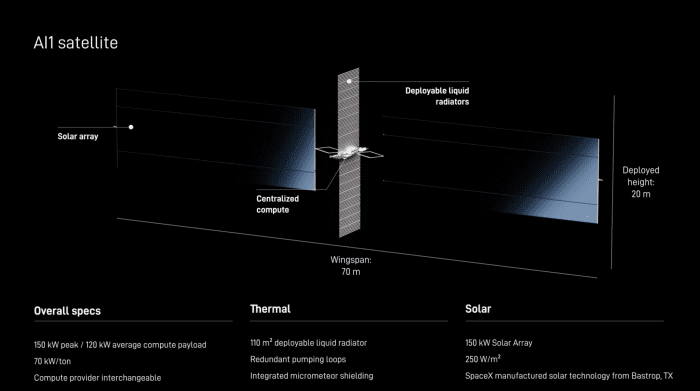
SpaceX just revealed the first detailed look at AI1, a satellite platform designed to run AI compute in orbit using continuous solar power. The unveiling comes days before what is expected to be the largest IPO in history, giving investors their first real look at a project that many dismissed as science fiction when it was first discussed.
The pitch is surprisingly simple.
AI companies are building datacenters at a pace that is starting to collide with power infrastructure. Utilities are struggling to keep up. Grid access is becoming a competitive advantage. Entire projects are being delayed because the electricity isn't available.
Space doesn't have that problem.
AI1 would generate power directly from solar arrays in orbit, avoiding many of the permitting, transmission, and local grid constraints that are becoming increasingly common on Earth.
According to Musk, each AI1 satellite could deliver computing power roughly equivalent to one of Nvidia's highest-end server racks.
More importantly, the platform is designed to evolve.
As newer chips arrive, SpaceX says it can upgrade future satellites with the latest hardware rather than locking itself into a single generation of compute.
What's interesting is how mundane Musk makes the engineering challenge sound.
He described AI1 as significantly simpler than Starlink. Instead of complex communications hardware, the design focuses primarily on solar panels, cooling systems, onboard compute, and laser links for moving data.
Whether it's actually simple is another matter.
Building orbital datacenters remains an enormous engineering challenge involving launch economics, thermal management, latency constraints, maintenance limitations, and networking complexity.
But compared to building a global satellite internet constellation, the concept may not be as outrageous as it initially sounds.
The manufacturing ambition is massive.
SpaceX's planned Bastrop facility could eventually span more than 11 million square feet, with AI1 production targeted before 2028 if development stays on schedule.
That's the kind of scale you build when you're planning for thousands of units, not a handful of experimental prototypes.
The customer interest is what makes this story particularly noteworthy.
Google and Anthropic have already reportedly signed on as early orbital compute customers.
That puts two major frontier AI labs on the opposite side of Sam Altman's earlier criticism of space-based datacenters, which he famously described as "ridiculous."
The reality is that the economics of AI are changing quickly.
A few years ago, orbital compute sounded absurd because terrestrial infrastructure was abundant. Today, some of the largest AI companies are spending tens of billions of dollars on datacenters, power contracts, and chip supply chains.
Against that backdrop, ideas that once seemed crazy start looking a lot more practical.
That's the bigger takeaway here.
AI1 shouldn't be viewed as a space story.
It's a power story.
The AI industry is discovering that intelligence is increasingly constrained by energy, not algorithms. Every frontier lab can imagine using more compute tomorrow than exists today.
The companies that solve the power bottleneck may end up shaping the next phase of the AI race as much as the companies building the models themselves.
Whether orbital datacenters become a major part of that future remains to be seen.
But for the first time, this idea looks less like a Musk thought experiment and more like an actual industrial plan.