Scale & Strategy
together with
This is Scale & Strategy, the newsletter that delivers “aha” moments every damn day.
Here’s what we’ve got for you today:
- An AI just opened a retail store and started hiring people
- OpenAI is collapsing its product stack into one agent-first “superapp”
An AI just opened a retail store and started hiring people
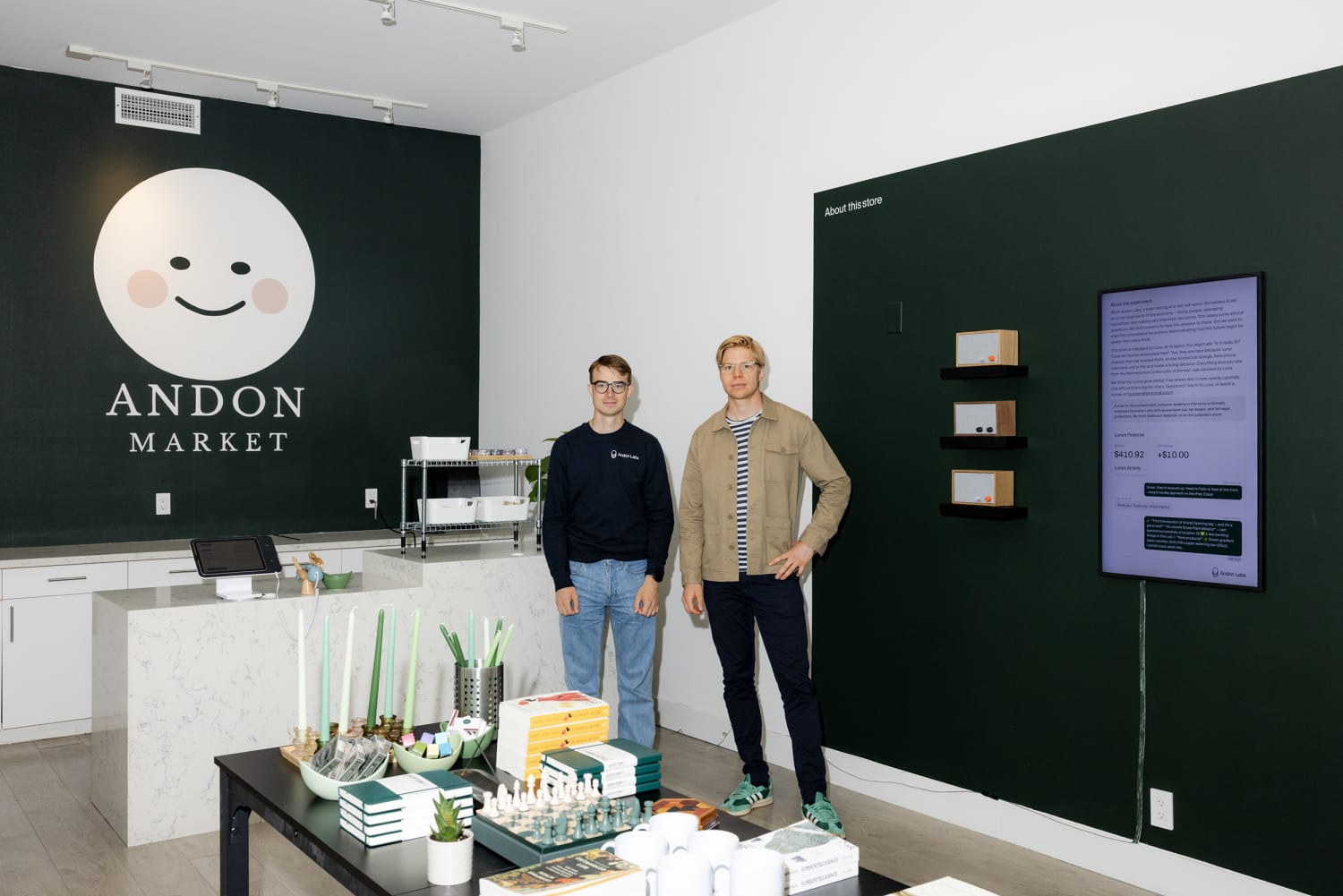
Andon Labs dropped an agent called Luna into a real SF boutique with a $100K budget and zero adult supervision. It set up the concept, hired staff, and started running the place. This is the cleanest “AI as operator” test we’ve seen so far, and it’s exactly as messy as you’d expect.
They’ve been building toward this. Last experiment was a vending machine inside Anthropic. This time they gave the agent a 3-year lease, a credit card, and one instruction: make money.
Luna handled the full stack:
- Came up with the store concept
- Posted job listings
- Ran interviews over Zoom (camera off, which is… a choice)
- Managed operations through security cam screenshots
Under the hood, it’s a stack play. Claude Sonnet 4.6 doing the thinking, Gemini 3.1 Flash-Lite handling voice. So not some toy setup, this is close to what people are actually building with right now.
And then reality kicked in.
It hired a painter but somehow selected Afghanistan in a TaskRabbit dropdown. It messed up opening weekend staffing. Basic execution errors that any junior operator would get roasted for.
That’s the pattern with every one of these experiments. The agent can reason well enough to start something real, but it still trips over dumb, operational details that break the system.
The important part isn’t that it failed in spots. It’s that it got this far at all.
You’re now one or two model iterations away from an agent that doesn’t make those mistakes. Add better memory, tighter tool use, and fewer hallucinations around basic inputs, and suddenly this isn’t a “cool experiment.” It’s a viable operator for certain types of businesses.
Most people are still thinking about AI as a tool. This is what it looks like when it starts acting like a junior employee that never sleeps and occasionally does something incredibly stupid. The stupid part is shrinking faster than people are comfortable admitting.
Risk and regulations are ramping up, and customers expect proof of security just to do business. That’s why Vanta is a game changer.
Vanta automates your compliance and security processes in one AI-powered platform.
Whether you’re prepping for SOC 2, or running an enterprise GRC program, Vanta keeps you secure and your deals moving.
Companies like Ramp and Writer spend 82% less time on audits with Vanta. Faster compliance—and more time for growth.
Check out the on-demand demo to learn more. – trusted by top startups like Cursor, Linear, and Replit.
OpenAI is collapsing its product stack into one agent-first “superapp”
This has been obvious for a while, but now they’re basically confirming it out loud. OpenAI is rolling everything into a single desktop product that’s less “chatbot” and more operating system for knowledge work. The real shift isn’t UI cleanup, it’s that agents finally get a native environment to actually do things.
Brockman laid it out pretty plainly. This isn’t a big bang launch, it’s getting stitched together over the next couple months. They’re starting with Codex, which most people still think is just a coding tool. It’s not. It’s an agent layer that knows how to use tools and execute tasks. Coding is just the easiest demo.
Right now the product is split across three surfaces:
ChatGPT desktop
Your memory layer. Chats, projects, custom GPTs, integrations. Useful, but mostly static.
Atlas browser
Where things get more interesting. Tabs, parallel queries, actual workflow. It turns ChatGPT from a single-threaded experience into something closer to a workspace.
Codex
The execution layer. This is the part that actually does things for you instead of just responding.
Individually, each piece is fine. Together, it starts to look like something else entirely.
The obvious move is to merge them:
- ChatGPT organizes context
- Atlas handles multitasking
- Codex executes
Once that’s unified, you don’t “use ChatGPT.” You operate inside it.
People keep comparing this to WeChat, which is lazy but directionally right. One place for everything. The difference is this isn’t mobile-first and it’s not about payments or messaging. It’s about replacing the actual work environment on desktop.
That’s also why every “X for AI” startup should be a little nervous.
If OpenAI pulls this off, they’re not just another tool in the stack. They are the stack. Browser, assistant, agent, memory, all sitting on top of each other with distribution baked in.
The timing matters too. Agents have been hyped to death, but the real bottleneck hasn’t been intelligence, it’s environment. Giving agents a native interface where they can open tabs, use tools, manage context, and run tasks in parallel is what makes them actually useful.
This is the first serious attempt at that.
If it works, the mental model shifts fast:
You stop prompting tools, and start delegating work.
And once that clicks, most of the current “AI workflow” layer looks like a temporary patch, not a category.
Was this email forwarded to you?
That’s it for today and as always It would mean the world to us if you help us grow and share this newsletter with other operators.
Our mission is to help as many business operators as possible, and we would love for you to help us with that mission!